Search demand
Review what attendees search for to understand the brands, products, services, and destinations that are drawing interest.
Attendance counts tell you how many people showed up. Map behavior adds another layer: what visitors searched for, which exhibitors they opened, where they asked for directions, and where the map left them without an answer.
The clearest signals often come from intent. A search says what a visitor wanted. A no-result query can show a missing listing, a confusing name, or an opportunity the event team did not see coming.
Review what attendees search for to understand the brands, products, services, and destinations that are drawing interest.
Spot searches that did not return a useful answer, then investigate whether a listing, keyword, or piece of event information needs attention.
See which listings are opened and how visitors interact with the map, giving organizers a more grounded view of exhibitor and sponsor visibility.
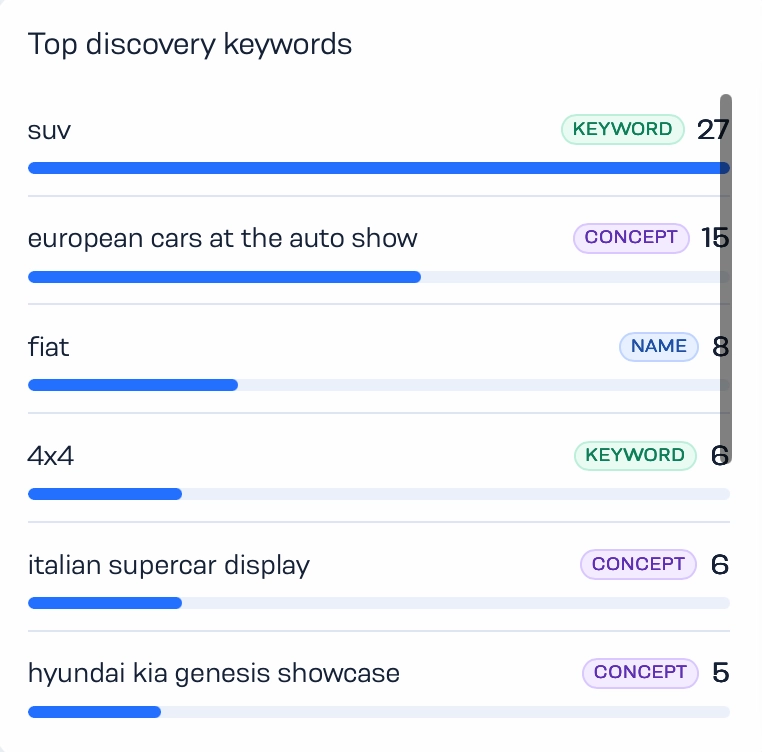
Instead of relying only on anecdotal feedback, the event team can look at the terms people used, the locations they explored, and the gaps they encountered. That makes it easier to improve labels, update categories, and plan the next show around real visitor behavior.
There is no separate survey to coax people through. The map records the discovery activity that happens when visitors search, open a listing, or request a route, so the data stays close to the actual event journey.
Track the language people use when they are looking for an exhibitor, product, service, or destination.
Review listing opens and map activity to understand which destinations visitors chose to investigate.
Use the patterns to make the next map easier to search and the next event easier to navigate.
Analytics can be added to the individual map that needs it.