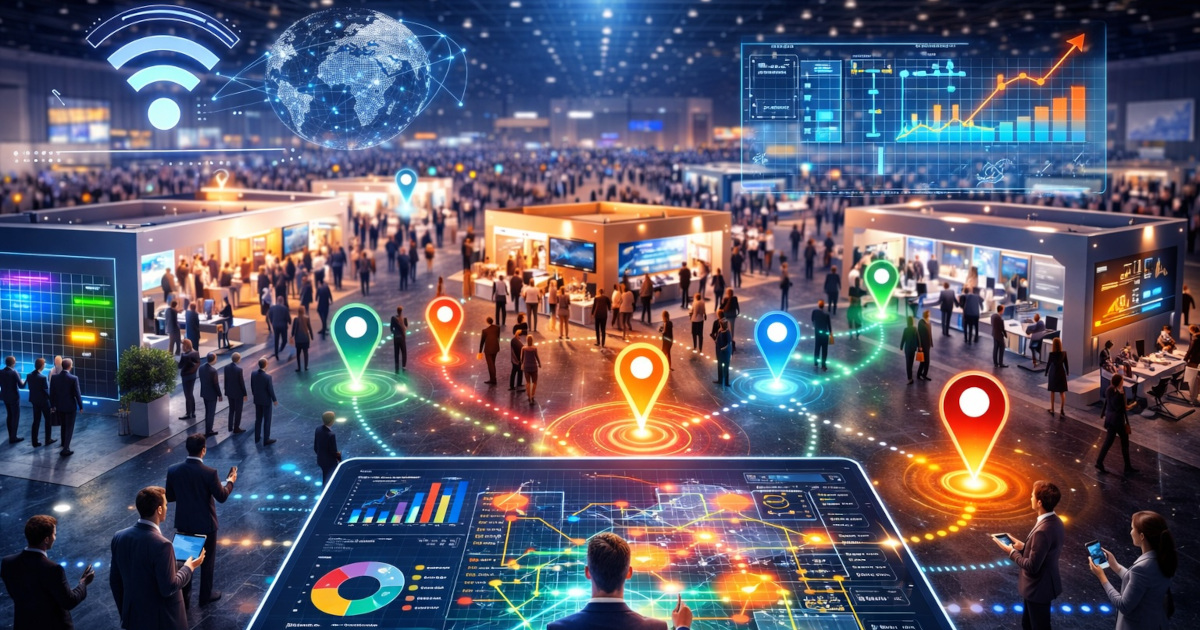
As trade shows continue to evolve into complex, data-driven environments, understanding how attendees interact with physical exhibition spaces is becoming increasingly important. While digital analytics has transformed online experiences, physical event environments have historically remained difficult to measure at a meaningful level.
Spatial analytics is emerging as a key capability that allows event organizers to gain deeper insight into how visitors move, discover exhibitors, and engage across large venues.
Moving Beyond Traditional Event Metrics
Event organizers today rely on metrics such as registrations, attendance, and session participation to evaluate performance. While these indicators provide valuable operational insights, they often fail to capture how attendees interact with the exhibition floor itself.
Spatial analytics introduces the ability to understand behavioral patterns related to navigation, zone engagement, and discovery dynamics. This enables event teams to design more effective layouts, improve visitor experience, and better support exhibitor success.
Designing Smarter Exhibition Environments
As exhibitions grow in scale, optimizing spatial design becomes increasingly complex. Understanding how attendees move through thematic zones, which areas attract sustained attention, and where congestion or underperformance occurs can significantly influence event planning decisions.
By leveraging spatial insights, organizers can create more intuitive and efficient event environments that align with real visitor behavior rather than assumed movement patterns.
Enhancing Commercial and Strategic Outcomes
Spatial analytics also plays a critical role in strengthening the commercial value of trade shows. By providing measurable insight into exhibitor visibility and engagement dynamics, organizers can develop more compelling sponsorship models and demonstrate clearer return on investment for participants.
This shift toward measurable spatial performance supports long-term event sustainability and enables more data-driven strategic planning across successive editions.
The Emergence of Insight-Driven Event Ecosystems
As the global events industry continues to integrate digital technologies, spatial analytics will become an increasingly important foundation for intelligent event design. Organizers who embrace these capabilities will be better positioned to create engaging, efficient, and commercially resilient exhibitions in an increasingly competitive landscape.