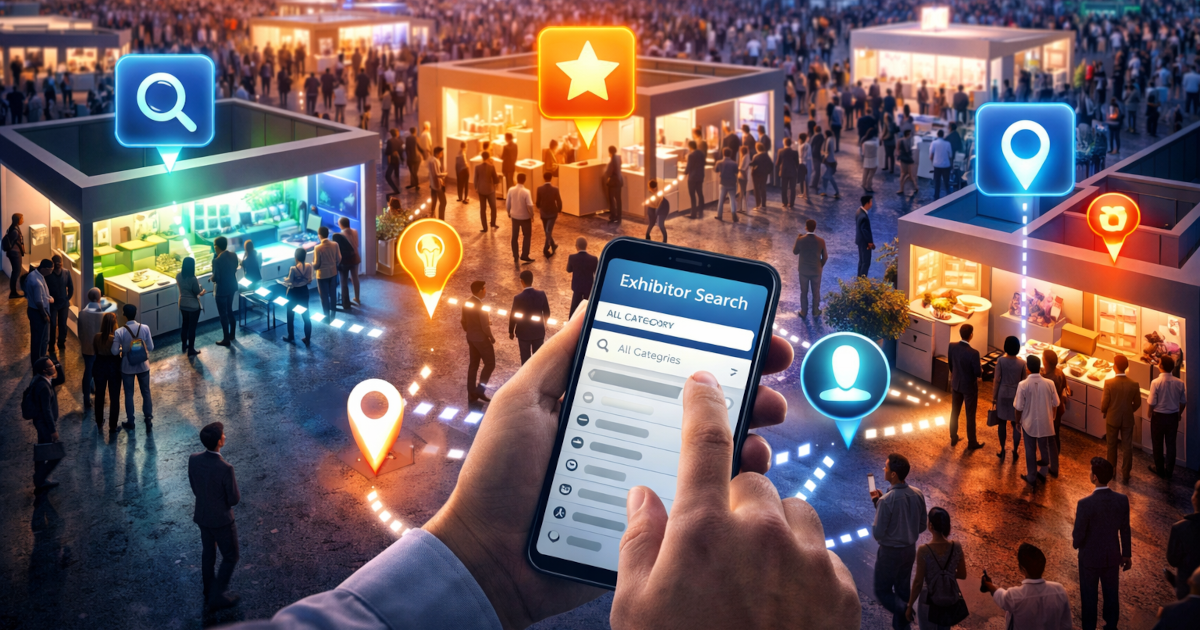
Trade shows and exhibitions are designed to connect attendees with relevant exhibitors, products, and innovations. However, the way visitors actually discover exhibitors inside large event environments is often far more complex than traditional event planning assumptions suggest.
Understanding visitor discovery behavior has become increasingly important as exhibitions grow in scale, diversify in content, and face rising expectations around attendee experience and exhibitor ROI.
Discovery Is Not the Same as Navigation
Most exhibition environments are structured around physical layout logic: hall segmentation, thematic zones, and booth numbering systems. While these elements help support orientation, they do not always reflect how attendees naturally explore the show floor.
Visitors often follow non-linear discovery patterns shaped by personal interests, recommendations, time constraints, crowd dynamics, and spontaneous exploration. As a result, some exhibitors benefit from organic discovery while others remain less visible despite strategic positioning.
Search-Driven Expectations in Modern Events
In digital environments, discovery is driven by search behavior. Users expect to find relevant content instantly by entering keywords, filtering categories, or browsing curated results. This expectation increasingly carries over into physical event experiences.
Trade show attendees arrive with specific objectives, such as identifying suppliers, exploring product categories, or discovering emerging trends. When event environments do not support search-like discovery mechanisms, attendees may miss relevant exhibitors, reducing the overall effectiveness of the exhibition experience.
The Role of Data in Understanding Visitor Behavior
Traditional event metrics provide valuable insights into registrations, attendance, and session engagement. However, they rarely capture how attendees explore the exhibition floor itself. Without visibility into discovery patterns, organizers may struggle to optimize layout design, thematic zoning, and exhibitor placement strategies.
Better understanding visitor discovery behavior can help event teams create more intuitive environments, improve attendee satisfaction, and support more balanced exposure across exhibitors.
Designing Events Around Real Discovery Patterns
As the events industry becomes more data-driven, there is growing recognition that exhibition environments should be designed not only for navigation but also for discovery. Searchable exhibitor directories, digital event maps, and intelligent navigation tools can help bridge the gap between attendee intent and physical exploration.
By aligning event design with real discovery behaviors, organizers can create more engaging trade shows, strengthen exhibitor value propositions, and build more sustainable event ecosystems.